Showing posts with label greenhouse. Show all posts

Sunday, September 22, 2013

You say tomato, I say passata

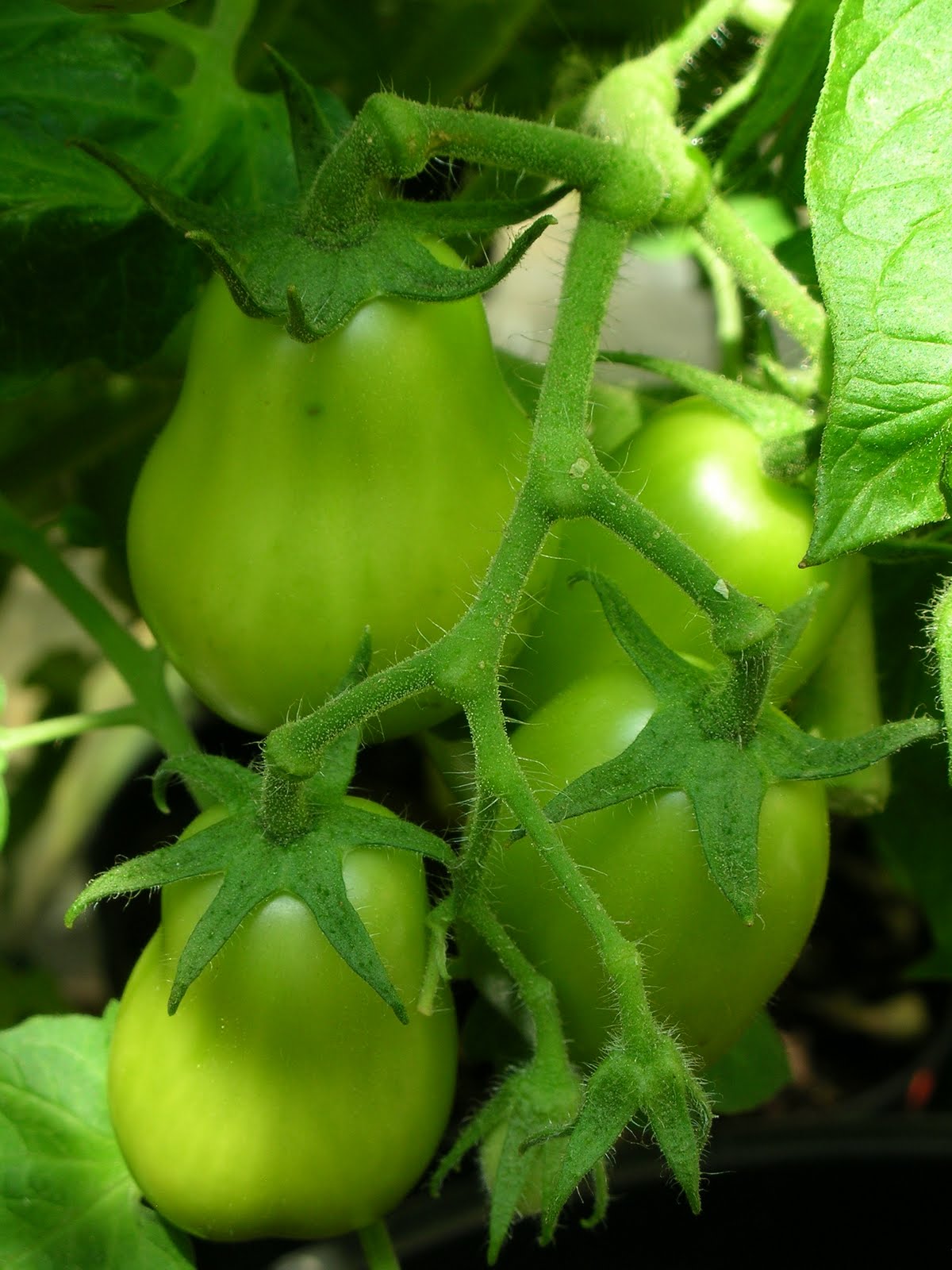
Every year, without fail I pack my greenhouse to the rafters with tomato plants.  Tomatoes are one of my least favourite foods, in fact I don't really like them at all. But I love growing them, hubby likes eating them and I like making passata to store in the freezer for winter pasta dishes.

I had some Franchi seeds (San Marzano and St Pierre) left over from a previous year and also 'rediscovered' some seed swap varieties hidden in the bottom of my overflowing tin that I had yet to try out. So I sowed 4 varieties in February – my new varieties for 2013 being Cuor di Bue (Ox Heart) and Tigerella.

Space is really an issue in my little concrete-floored greenhouse, but with a bit of grow-bag jiggery-pokery, I can shoehorn 8 plants onto my restricted floor space, leaving the staging surface clear for chilli plants and smaller plant propagules in trays. 

The very late spring meant that it was early June before I moved them outside, my final planting tally being 2 each of Cuor di Bue and Tigerella and 1 each of San Marzano and St Pierre. The wonderfully warm weather in June and July brought the plants on well and they flowered strongly. But pollination seemed to be an issue for some of them (despite tapping the plants regularly to distribute pollen and leaving the greenhouse door open as often as possible). 

The Cuor di Bue crop has been the largest in terms of fruit size – huge double or triple fruits with a very 'meaty' texture and few seeds.


The Tigerella crop was wave upon wave of small juicy fruits, which is continuing still well into September. According to those who have tasted them, these are the sweetest tomatoes I've grown so far.


Of my 2 Franchi varieties, St Pierre has been a moderate harvest with some nice sized fruits but San Marzano was certainly the worst. A single plant produced fewer than 10 fruits, none of which exceeded 5 or 6cm in length. Quite disappointing really, compared with other years. 

But all the tomatoes have been regularly collected as they've ripened and roasted as a mixture to form the base of my pasta dishes for the months to come.  Now that's how I do like to eat my tomatoes!


Sunday, January 13, 2013

2012 – the year that salad forgot

It has to be said that 2012 wasn't the best year for salad leaves. I started well, with a couple of small lettuces overwintered in the greenhouse and moving into the early spring we have good harvests from cut and come again salad leaves grown under a heavyweight glass cloche in a raised bed. But then the drought set in and then the monsoons started. And the salad stealers arrived... It seems that the slugs in my garden have a good appreciation of the perfect moment to harvest (devour) young salad leaves. They, as I, would check on the developing seedlings on a daily basis. And when the leaves had reached the perfect tender size to be picked, I headed out to the cloche to find....nothing. Absolutely not a trace of them. This happened a couple of times before I gave up completely on the resowing front and started buying the bagged supermarket variety again – at least that way I could guarantee I would have salad available when I wanted it.

Anyway, I have started the new year afresh with renewed optimism and have sowed my first batch of salad seeds in a seed tray in a propagator in the greenhouse. Let's see you fight your way through these, slug invaders!

seeds sown on the damp surface of a potting compost and homemade compost mix

Seeds tucked up under a layer of vermiculite and the propagator lid

Friday, November 30, 2012

The chill sets in

Brrrrrr! It was a bit parky out in the suburban veg plot today. But as the low low temperatures had temporarily made the swamp-like lawn firm enough to walk on, I continued the end of the year garden tidy.

The greenhouse got a good sweep out and I washed the cold frame glass. I need a couple of replacement panes for the cold frame (*adds to hubby's to do list) but as it's only garlic in there, I think they'll be fine with the extra ventilation. The cloves planted out in the raised bed are already peeking their little green shoots above ground.

All this frost should be good for my first sprout harvest. There are some that have developed on the fat stalks but I'm not sure how good they look. Does anyone manage to grow them as they look in the supermarket? Mine are about a third the size and don't look as 'solid'...

But the ever-reliable broad beans are soldiering on. Anyone reading my blog over the past couple of winters will know that I love my broad beans. My harvest this year was a pretty good one and all the beans that aren't eaten fresh are immediately frozen so I have home-grown beans all year round.


The neglected brassicas (see previous post here) have taken to their new homes quickly. I'm putting a positive spin on this and predicting that I may have a much extended harvest season through the springtime as a result. Some call it neglect and forgetfulness, I prefer to term it successional planting out.


And the start of the proper overnight frosts signals that parsnip season is now upon us. After a bit of a struggle to germinate them this year, I did manage to produce a respectable crop that I'm sure will last us through the winter.


Wednesday, March 14, 2012

The salad challenge

I'd fully intended joining the 52 week salad challenge that was started over on VP's Veg Plotting blog back in January. I even thought I had a head start as I'd managed to germinate a few lettuce seeds (butterhead type) in the greenhouse in December. Smugly I transplanted the strongest 2 to small pots and waited for them to burst into growth so I could have my first salad by the end of January.


note: reused label, thus date from last summer

And I waited, and I waited and then I waited some more. And then I realised that small pots of my own homemade compost might not contain the optimum nutrition required by these young plants. (Note to self: pay more attention in plant health and nutrition classes...)

As the weather had recently improved, I decided the time was right to send these little seedlings out into the big bad world to fend for themselves. So I planted them out into my salady/green leaves raised bed and topped them off with a cloche (yes, another one - I couldn't resist it/it was in the sale/I had a 20% discount code). It's a beautiful replica Victorian one and the lettuces seem to really be enjoying themselves in there...


In the spaces around them I have sown some mixed salad leaf seeds that have performed very well for me in previous years - a mix of oak leaf, cos and something resembling mizuna.


Meanwhile back in the greenhouse is a rather large tray of lettuce seedlings that I brought home from college last week. We're doing lots of practical sessions at the moment and did our 'seed sowing in containers' practice last month - of which this is my result. A conservative estimate puts around 200 seedlings in this tray - and they're still germinating. Maybe this year is my foray into commercial lettuce production?

seedlings as far as the eye can see...

Wednesday, December 14, 2011

An untypical gardening year

What a strange winter we're having. I've just harvested the last chillies from my Lemon Drop and Bulgarian Carrot plants. They've been inside for only 2 weeks - just to ripen the last few fruits. Prior to that it was still warm enough in the greenhouse for them to thrive.
I've tried overwintering chillies previous years but they do tend to suffer from aphids and don't seem all that far ahead of those grown from seed in Feb.
So, it's into the composter for the last five plants. And only 6 more weeks before I'll be starting to sow new ones!
What unseasonal edibles are you still harvesting?

Monday, September 26, 2011

September chilli fest

I'll confess that I'm slightly pitying of anyone who doesn't like chillies. In my book, that's like saying 'I prefer my food to taste quite ordinary, I don't really like making it a bit more interesting'. Chillies don't have to be hot to make a difference in food, they can add fruitiness, spice or simply an unidentifiable tang that just adds a bit of pizzazz to everyday flavours. Tomato and mascarpone pasta sauce? Throw some chopped hot cayenne in there! Stir fry or pad thai? Whack a scotch bonnet in it! Courgette fritters? A couple of bulgarian carrot chillies will add some zing!
My chilli rollcall this year is as follows: Hot Cayenne, Peruvian Chinense, Scotch Bonnet, Razzmatazz, Numex Twilight, Lemondrop and Bulgarian Carrot. The latter 3 are new to me this year, the others I've grown at least once before.
Chillies have a long growing season, so most were sown back in February and March. I get the best results keeping them in the greenhouse and it means I can prolong the ripening through to October if I'm lucky.
Most of my harvest will be added to the freezer so we have an all year round supply. If I have a real bumper crop I may dry some to grind down for chilli powder or make a small batch of chilli jelly.

Scotch bonnets
New flowers on the Razzmatazz plant 
Hot cayenne ripening in the sun
The changing colours of the Numex Twilight


Monday, September 19, 2011

Tomato tasting

There are 3 types of tomato growing in my greenhouse. Which, some might say, is 3 types too many for someone who doesn't actually like eating them. But I love growing them.
And I find I can make things with them that I do like to eat - it's just whole and/or raw tomatoes that I don't like to eat. Sun dry them and it's a whole different story, make them into ketchup and I'm there.
Anyway, I'm growing Moneymaker, Roma and Gardener's Delight, which I realise are not varieties that set the gardening world on fire, but most of the seeds were freebies with gardening magazines so I stuck with them.
This year the Roma and Moneymaker plants have not grown particularly big, but their output in the last few weeks is more than making up for that. They're all still getting a weekly dose of liquid organic feed to keep them happy.


The single Gardener's Delight plant has been fruiting prolifically, giving hubbie a regular supply of fresh tomatoes for his lunchtime sandwiches.


The Roma plum tomatoes have been harvested once ripened, skinned, stored in the freezer and then every week or so I've been making a batch of passata, which then goes back into the deep freeze for another day. I make a great tomato and mascarpone pasta sauce when the mood takes me.
And the Moneymakers have been harvested green and made into chutney - the kitchen looks like a catering establishment!


Thursday, August 4, 2011

Making comfrey tea

Back in March 2010 I established a comfrey patch in the suburban veg plot. It established itself well (despite the variable summer) and I followed the advice not to cut from it in its first season to allow it to establish well. Come spring 2011, it reappeared as promised and grew strongly, taking advantage of the plentiful nutrients coming out the back of the compost heap. However, my access to said comfrey was not so easy as I imagined. Blocking my way to the comfrey from early spring was a bramble stem so thick and strong you could have swung around on it like Tarzan. Albeit it Tarzan wearing a pair of heavy duty thorn-proof gauntlets, but you know what I mean. And even once you got past the bramble, which, by the way, grew faster than a courgette on steroids, there was the virtually impenetrable barrier created by the basal shoots of the laurel hedge to contend with. Now, I do have the tools to deal with the vegetation, but then we got the are-ay-tea invasion. Eeeugh! With their long snakey tails and their beady eyes, they took up residence in the compost heap creating an entrance burrow at the rear, right through my comfrey patch. Anyway, now that we have a new - and more importantly rat-proof - composter, full access to the comfrey patch has been restored.

Aside from using comfrey leaves as a compost activator, a mulch and as a direct feed in the bottom of planting holes/trenches, it can be used to make a 'tea' liquid feed for any veg or fruit plant you grow.  So, to make your comfrey tea - first harvest your comfrey. Leaves and stem can both be used. I would recommend the use of gloves for this as comfrey has small hairs on both leaves and stem that can irritate the skin.


There are various vessels you can employ for stewing comfrey tea. I've gone for the small but perfectly formed 2-pint milk container.
I'd definitely recommend a method that has the brew closed in, rather than left open - the smell is absolutely rank.
Stuff said container with as much comfrey as you can possibly cram in.


Fill container with water and replace the lid. Leave for 5-6 weeks to brew - date the bottle to help you keep track. The decomposition of the comfrey in the water may give off gases which could build up in the container. The beauty of the milk container is that the cap usually allows most of these to escape as it's not the tightest fit. If you use a squash or fizzy water bottle then these caps usually fit very tight and so you might need to release any built-up gases every week or so.
Your resulting tea needs diluting down with water before using on plants (1:10 tea to water is usually recommended). Once you've got the hang of this, you may never need to buy liquid plant feed again.

Saturday, July 16, 2011

Summer summary

I've been managing to keep up the watering regime during this week or two of hot weather and it seems to be paying off. We've had the occasional downpour to top up the waterbutts and give the raised beds a good soaking but the greenhouse crops pretty much need watering every second day.

The chilli harvest has started - hot cayenne and razzamatazz - and I'm slowly building up a freezer bag of them which will hopefully then last us through until next summer. We officially used the last frozen 2010 chilli about 2 weeks ago, so are very pleased to be self sufficient on that front. I've got about 7 different chillies growing - and I fear this is turning into something of a fetish...


The courgettes are starting to produce fruits faster and faster now. The Gold Rush variety, a beautiful solid rich yellow courgette, is very attractive on the plate and has a lovely taste.


One veg (well, fruit if we're being pedantic) that hasn't grown as well as in previous years is the Roma tomato. I'm not sure why, as the early days looked very promising. I have two plants in the greenhouse but they don't seem to have reached the size they have done before. There seems to be plenty of small fruits forming and I'm feeding them well. It's just they look quite dwarf compared to the Moneymaker plants next to them.


The salads have been a roaring success - both the loose leaf types and the butterheads. The latter were a trial seed I received free from DT Brown. They grew really well and almost took over one of the raised beds. I had to harvest some of them just to give the shallots their space back. In the end, the slugs and snails took over so the last few lettuces went on the compost heap, but one of two of the bases are re-growing so I may have another mini harvest from those before I need the space for something else.


Wednesday, May 4, 2011

planting out the tomatoes

So, only a couple of weeks after the great tomato giveaway, I'm finally ready to put the best of the bunch into their final growing positions in the greenhouse. My greenhouse is quite teeny but I cram as much in as will fit but still allow me to access everything for watering. And my techniques and methods have been honed and tweaked over the last few years until I have what works best for me.


Tomatoes really benefit from extra root depth so I've cut the bottom off a couple of large plastic plant pots to provide this. It's basically the same as those expensive 'tomato grow pots' you'll find for sale in the garden centre - so money saving and repurposing all in one. I also tend to put the growbag on its side to maximise the depth of compost rather than using them flat on the floor.


I cut a hole in the growbag the same size as the interior circumference of the bottomless pot and then push the pot into this to about a 1 inch depth. Then I pot up the tomato in the usual fashion. I find that 3 tomato plants per growbag works well - anymore than that and I get lost in a jungle of foliage.


In February I sowed some self-saved tagete seeds and the seedlings of these are planted into small holes at the front of the bag in an attempt to ward off the whitefly. Whether it actually works or not is a mystery to me. My toms haven't suffered from whitefly, but as someone on a gardening forum recently commented, they haven't suffered with tigers either, so maybe it works on them as well...

Bottletop drippers are positioned at the back of the growbag, leaning up against the greenhouse wall so I don't need to hand water the plants every day (I'm a bit forgetful on that front if the truth be told).Then I pour myself a generous Pimms and sit back and wait for the harvest.

Friday, April 15, 2011

The great tomato giveaway

It was when I fell over the tomatoes for the 15th time that I got really annoyed. They were in a seed tray on the floor of the greenhouse - 6 plants each in a 5 inch pot - I should have realised they would impair my movements given that my greenhouse is about the size of your average corner bath (you know, one of those 80s avocado numbers - surely my parents weren't the only ones committing offences against interior design thirty years ago?). So I picked up the tray to move it somewhere more suitable. And that's when the scales fell from my eyes and I saw for the first time the reality of the situation I found myself in.
I think most of us sow more seeds than we need - to allow for germination failure - then the general advice is to select the strongest ones and thin out the weaklings and throw them away. I would estimate that I had an average germination rate of 80% across the 4 tomato varieties I sowed. And that's where problem started. I just can't throw plants away! First I'm waiting to see if the smaller ones are suddenly going to overtake those that looked strongest in the first place. So I prick them all out - just to give them all an equal chance. Weeks later, they're all growing on strongly and I keep potting them on - in newly bought compost and watering them all with precious rainwater from my water butts. I spend weeks in March carrying them all out to the greenhouse each morning and carrying them back indoors each night to tuck them up. Through April I see them flourishing in the sun and the bigger they get the more I can't bring myself to throw them on the compost heap.
So this emotional attachment has finally culminated in a veritable jungle of plants in a very compact greenhouse. And this is not just a case of a 'few' too many plants, oh no, this is proper obsessive. Each summer I have space in my greenhouse for a total of 5 tomato plants, 6 if I'm not growing melons as well (that's another post altogether). Guess how many tomato plants I have - that's right, 42. And it's not just tomatoes, I'm the same with peppers and chillies. Once the tomato plants are placed in grow bags on my greenhouse floor, I have space on the staging for 8-10 pots, depending on the pot size. So why on earth wouldn't I raise 59, yes, you read that right, 59 chilli plants. And still yesterday, I found myself potting some of them on again as they'd outgrown their pots.
This just can't carry on, it is, as they say untenable, unsustainable and just plain impossible. I'm going to ruthlessly pick out the strongest ones to keep and the rest are going on freecycle. And once they're gone, I'll see what else I can giveaway.

Tuesday, March 29, 2011

Emerging into the light

So, we've now reached the end of March and are officially into British Summer Time. Yes, that'll explain the forecast for torrential rain tomorrow - but to be honest that's what umbrellas were invented for. At least the garden will appreciate it, even if the chickens don't.
The house has been a hive of sowing activity this month. I established a production line of modules in unheated propagators circulating their way around the house. Last year's scheme, which had seed trays sitting on the heated kitchen floor was a good one in principle, but there were a few, let's say, tripping incidents en route to the back door. So this year chilli seeds have been germinated in the airing cupboard before being moved to one of a number of 1st floor rooms to take advantage of either the early morning or afternoon sun. I've even been creating foil wrapped receptacles out of wine boxes in which to sit seed trays of emergent seedlings in order to reflect sunlight all around them and reduce the leaning tendencies of young seedlings towards the light - which I learned recently is termed phototropism.

The shallots are germinated and residing in the unheated greenhouse, where they'll stay until mid-April.
The leek seedlings are up - but will stay in their respective pots until May/June. They've been moved outside the greenhouse now but the trick will be keeping them watered during the warmer months. Basically if I don't fall over it on a daily basis it risks being forgotten in the watering round. As for the next stages, the common advice is not to plant them out until they're 'pencil thick' but I've yet to achieve that. To be honest, some of mine are still only pencil thick when they're harvested, but that's usually due to planting out too late which restricted the length of time they have to re-establish themselves before winter set in. I've introduced a journal of sorts this year in order to plan my timings better. But let's just say I'm not holding my breath...

Wednesday, March 16, 2011

No queues at Kew

I took a break from the suburban veg plot last week and took the train to Kew Gardens to meet up with a good friend. The visit served a different purpose for each of us. Since completing my RHS course, I've become a little more interested in ornamental gardens and my only previous trip to Kew Gardens was as an environmental science student in the mid 1990s and I couldn't really recall much of what I saw there. She on the other hand, is a student of design and architecture and wanted to see the Xstrata Treetop Walkway designed by Marks Barfield Architects who also designed the London Eye (which, as an aside, can be seen from the walkway).
The walkway is 18m above the ground (so not for the faint-hearted) and currently accessible only by a staircase. The original lift, intended to ferry wheelchair users and child buggies to the top, hasn't worked reliably since construction was completed and is now out of service until they come up with a replacement for it. Once at the top, you have a panoramic view of Kew Gardens and the city and countryside beyond. You are quite literally walking through the treetops and I'm sure that come late spring and summer, when the leaves have returned to the trees around, the experience will be different again when you'll be able to reach out and touch the foliage.


We also took a walk around the Temperate House, once the largest glass structure in the world and now the largest surviving Victorian glasshouse in the world. It's official, I now have greenhouse envy... My greenhouse will only fit 2 grow-bags on the floor plus a small staging unit for the pots of chillies - a bit on the tiny size compared to this one...


Wednesday, May 26, 2010

top gardening tips for hot weather

Phew, what weather we've been having this past week! Saturday was soooo hot - particularly if you happen to be climbing Mt Snowdon like we were. And that's "climbing", not "getting the train up, having an ice cream and then getting the train back down". There are 7 walking routes to choose from when it comes to getting up that big Welsh mountain and we decided to challenge ourselves by doing one of the toughest - The Watkin Path - 3.5 hours up and then 3 hours down again. Gradient aside, the sun for the first 2 hours made for a very hot and exhausting walk. However, armed with factor 50 sunblock, a cotton neckerchief to keep the worst of the sun off my neck and a plentiful supply of water for along the way, I got to thinking about sun and heat protection for the suburban veg plot.

One of the best investments I've made for the veg plot thus far is an automatic greenhouse vent opener. It's basically a hinged arm hydraulically controlled in response to rising temperatures. As the internal temperature in the greenhouse rises, the arm starts to push the window open. Gardening magic at its best and perhaps the best £25 I've spent.

Last year I also bought some water-retaining products to use in hanging baskets and pots. Both the granules, which you mix with compost when potting up containers and the mats, which I've found most useful for hanging baskets have proved their worth. It's so nice not needing to water them numerous times every hot day and the various fruit and veg growing in them still seem happy enough to start flowering.

And finally, if I get chance this weekend, I'll be applying a coat of Coolglass on one end of the greenhouse. This white pigment (titanium dioxide) is mixed with water and painted onto the glass panes and acts to reflect the sun's rays thus keeping the temperatures down and preventing plants from drying out too quickly.

Hopefully those measures will go some way to maintaining my veg growth if the sun stays with us this summer!

Sunday, March 21, 2010

planting progress

At long last the ground outside seems to be warming up enough to start planting out or sowing direct. The sun has started to linger on the raised beds in the suburban veg plot making it a warm and fuzzy place to potter around in once more. Even the comfrey, planted only last week, looks like it's growing strongly.
The Lancashire Lad purple podded peas were planted out in their final position and are looking very contented. They grew over 6 foot tall last year and I struggled to support them on canes - so this year I've put them at the base of a fixed trellis which should support them easily.


The overwintered garlic cloves are looking really strong. I selected the largest bulbs from the 2009 Purple Moldovan harvest and they're certainly looking even better than this time last year (the concept being that year on year the selected variety adapts to the conditions in your own garden).


The Solent Wight bulbs - every last one of them has come up and a couple seem to be developing as multi-bulbs.


The tomato, chilli and sweet pepper seedlings that are growing in the kitchen have been benefitting from daytimes spent in the greenhouse - the all day light should bring them on swiftly and strengthen them further. They're still coming back indoors each evening as i don't think it's yet warm enough to leave out overnight.

And cosy in the sunny kitchen still are my little celeriac seedlings. Gosh they're tiny! One of them produced a teeny weeny true leaf this week but goodness knows how long it will be before they're big enough to transplant - 2012 maybe??

Tuesday, December 29, 2009

2009 - a review

The first full year of the suburban veg plot is now complete and it seems a good time to look back on this year's harvest to review the best and worst . Some things grew more successfully than others,either in spite of or despite my best efforts.
Top marks must go to the greenhouse plants - tomatoes (3 types) and chillies (5 types). They flourished and fruited from April to October providing us with a cupboard full of green tomato chutney, an airing cupboard full of dried chillies, a freezer full of frozen ones and one or two to-die-for passatas.
Bottom of the class goes to the squash family - pumpkin, outdoor melon and butternut squash. The former didn't last as far as planting out, the second died within weeks of being carefully placed in its own raised bed and the latter went rampant with leaves but not a single female flower was to be seen. But i shall attempt them all again in 2010!
I won't be bothering with runner beans again - we got bored of them after just one harvest, but despite being left to their own devices, the plants soldiered on determinedly. I've saved some beans from them before consigning the remainder to the compost heap, but these will be only for giving away if I can find a willing recipient.
Already my fingers are itching to get out there sowing and I can almost hear the new seed packets clamouring to be released from within their dark cupboard home. I'll ignore them for as long as I can...

Sunday, December 6, 2009

winter prep

I'm finding that winter gardening is not so much about growing than about preparation for the upcoming season. My weekend potter around the garden is predominantly about checking on the small selection of crops in the ground - leeks, overwintering onions, garlic and broad beans - before tidying pots, cleaning tools and planning the veg plot for 2010. The leeks are really coming on well now and we're harvesting them regularly for heart-warming leek and potato soup, or griddled leeks with cheese sauce. Mmmmmm...
I'm also experimenting with sweet peas - again. I've not actually managed to grow these from seed yet. My mum donated first a whole pot of them (which are now residing in a border and grew well this summer) and now a bag full of saved seeds. I'm trying the loo roll method of sowing them, which has worked well for me with broad beans and peas - and also threw a handful of them in the border vacated when I pulled up the runner bean plants. I'll let you know what happens with all that in the springtime.
I need to find the time to give the greenhouse a good clean out sometime before Christmas - it's recommended to fully clean down the inside to get rid of any diseased leaves or lurking insects so as to reduce the risk of harbouring anything nasty for next year.
My seed box overfloweth and I really think my plans for next year exceed the space I have available, but only time will tell..

Saturday, October 24, 2009

Suburban veg plot you are not forgotten

Oh, how the weeks fly by when you have a full time job and a house to unpack/finish/furnish and a wedding to start to plan. The cliche of 'I don't know where the months go' is certainly appropriate right now. I've managed to keep on top of the garden task (just about), so I've dug in well rotted manure to three of 6 raised beds and even planted Senshyu Yellow onion sets and Purple Moldovan garlic cloves but I just haven't found the time to take any picces or report back...

The plot needs a good tidy as well - there are random plant pots lying around alongside discarded twine and canes. The tomato plants were cleared from the greenhouse a couple of weeks ago and the last of the extremely unsuccessful sweetcorn was pulled up for the the compost heap.

The upside is that the Boltardy beetroots are thriving on their near-neglect, so I've been having lots of lovely goats' cheese and beetroot salad lunches, and the winter leeks (2 varieties, the names of which escape me right now) seem to be growing well.

Backing up in a queue waiting for my attention are Radar onion sets, garlic cloves from the Isle of Wight, and mixed tulip bulbs from Amsterdam (not exactly veg, but they're the only flowers I get excited about). I did sow some kale, savoy cabbage and spring cabbage to plant out but again, my attention and time was elsewhere and I think they've either been eaten by the slugs or just gone on strike due to lack of attention.

So, this is my solemn promise to the Suburban Veg Plot and to the blog - I promise to attend to the veg plot more frequently than once every two weeks and also I will update this blog on at least a fortnightly basis - notwithstanding any furniture purchases or wedding preparations...

And just one last thing - a thank you to whoever invented wireless internet access - I'm posting this from the Concorde lounge at Terminal 5 awaiting a flight to Chicago. Be good y'all!

Tuesday, August 25, 2009

AWOL on the plot

Okay, okay, I know I said I would post more often - but when you're moving house, things such a blog do tend to take a back seat. So, we finally moved into our house and are slowly getting through the dust left behind by the various tradesmen. A few last light fittings and radiators plus the installation of the ensuite shower and we'll be done.
Anyway, back to the suburban veg plot. Things have been rocketing along despite the variable weather. Thank heavens for the greenhouse - a veritable array of chili peppers have been fruiting and ripening: from purple jalepeno to scotch bonnet, from hanoi red to peruvian chinense. Every stir fry is a party on the tongue!

The onions have all been harvested now - the best results came from the Senshu variety - but I got nothing from the Swift or Red Barons. We got bored of eating runner beans after the first harvest - I don't think I'll bother with any next year. I have some soya beans to try instead.
And at long last I have managed to grow beetroot! Last year ended in very few seed germinating and those that did were eaten by those nasty molluscs so I'm very excited. Not sure exactly what I'm going to do with it yet, but that's what internet recipe sites are for!

Monday, May 11, 2009

Now we're motoring...


A busy Sunday was had in the suburban veg plot. More spring cabbage was harvested - I think they're starting to go to seed so we may be eating cabbage rather a lot over the next few weeks. A few more radishes were uprooted and new seed sown in their place.
Excitement abound as the purple podded peas (Lancashire Lad) are seen to have shot up to 6 foot and are now in flower - in beautiful colours! So hopefully the cabbage dinners will shortly be making way for purple mange tout.
I've been hardening off plants over the last few weeks so took the plunge and planted out 2 summer purple sprouting broccoli, a Floridor courgette and an outdoor melon. With a few pieces of strategically placed fleece and one or two plastic bottle cloches in place everything should be fine if the overnight temps suddenly drop again. I've still got Defender courgettes, butternut squash and pumpkin in the greenhouse in large pots, so they'll make the transition to outdoors over the next week or so. At that stage I'll actually be able to move around in my little greenhouse and reach the tomato plants rather than flinging water in their general direction.
The flowering broad beans (Aquadulce) are now waving little baby pods around and the spring-sown broadies (Express) are already showing their first leaves in the same plot as the peas.
I have learned a new way of dealing with slugs - my preferred method thus far has been to scoop them up on a trowel and then catapult them at speed towards the laurel hedge at the bottom of the garden. Although it gave me great satisfaction to hear the little muffled thud as they hit the tree trunks, it was pointed out to me that given that they're made mainly of muscle, they were probably getting off with a bit of a headache before heading back towards my raised beds for another snack. So, with the aid of an upturned flower bucket, I'm now laying them out as fast as I find them as a snack for our friendly garden blackbird - who seems very pleased with the general arrangement.

Potato update 2009: The first bags of Mimi and Anya are almost filled up with soil with plenty of potato foliage (haulms, so I'm told) on top. Looking forward to the harvest in a couple of weeks!